14th – 15th c.
The Jewish Quarter
Considered the best-preserved Jewish quarter ensemble in Portugal: ogival doorways, cobbled lanes, and the 14th-century Synagogue.
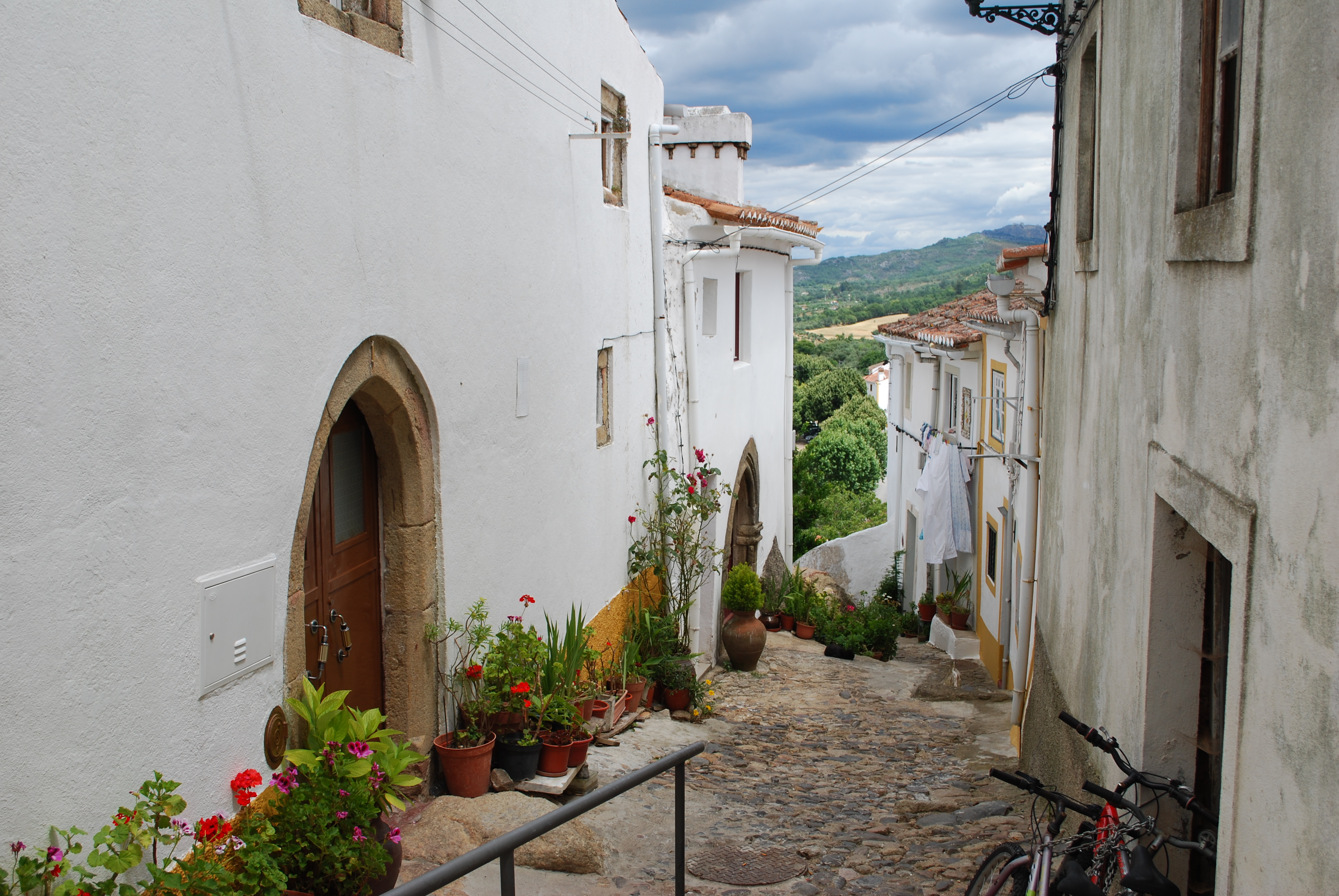
Jewish presence is documented from the 14th century: King Pedro I granted land to Master Lourenço, his physician, believed to be Jewish.
After the 1492 expulsion edict in Spain, roughly 4,000 Jewish refugees settled here, and the Judiaria reached its peak in the 15th century.
It is considered the best-preserved Jewish quarter ensemble in Portugal: ogival doorways, cobbled lanes, and the old Synagogue building (14th c.), one of only two surviving medieval synagogues in Portugal — the other in Tomar.
Used secretly by New Christians after 1496, the Synagogue was restored in the 20th century, uncovering the tebah (ark platform) and mezuzah marks; the tabernacle was rediscovered in 1972. It is now a museum.
The Fonte da Vila fountain (16th c., reign of King João III, a National Monument of Public Interest since 1953) stood at the heart of the Judiaria and was a rare daily meeting point between Jews and Christians.
Related routes
- Guide
On foot · half a day
Classic historic-centre route
Castle → Judiaria → Synagogue → Fonte da Vila → main square. The most direct reading of the walled town.
- Guide
On foot · 2–3 hours
Guide to Fountains & Fontanários
The town can be read through its water: from the 16th-century Fonte da Vila to small street fountains and the old thermal bathhouse.
- Guide
On foot · 2 hours
Guide to the Judiaria & Jewish Heritage
Synagogue-museum, ogival doorways, and Fonte da Vila as a meeting point — in a quarter that is still lived in.